NEW STARTER INTERVIEW
Senior Manager, Strategy and Communications
We sat down with our newest team member to find out what brought her to TBI, what makes research communications tick, and what she’s looking forward to most.
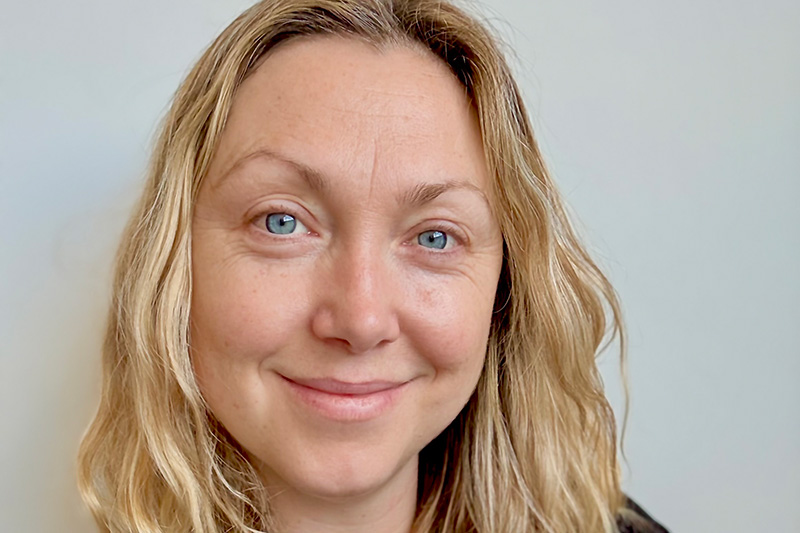
15 years in scholarly publishing is a long time. What keeps you so engaged with this sector?
It’s genuinely one of the most interesting corners of the communications world. The sector is grappling with enormous structural questions; open access, the role of AI, how researchers and societies relate to one another, what publishing even means in a digital-first environment, and those aren’t just operational challenges, they’re deeply human ones. And it’s an ecosystem that includes a wide variety of players. I spent a decade at IOP Publishing, where I created the society partners marketing function and worked with organisations like the American Astronomical Society, the DPG, and the Japan Society of Applied Physics. Every society has its own culture, its own priorities, its own relationship with its community. That variety never gets old.
What drew you specifically to TBI?
TBI has a reputation for doing genuinely strategic work, not just executional marketing, but helping clients think through difficult questions and arrive at smarter decisions. That’s where I’ve always been happiest: at the intersection of insight and action. I’ve also admired the calibre of the clients TBI works with: IGOs, global publishers, world-leading societies, and the depth of sector expertise on the team. It felt like an organisation where I could both contribute and continue to grow.
You’ve worked across consultancy, brand, technology, and research. Is there a thread that connects all of it?
Curiosity, probably. And a belief that good marketing has to be grounded in real insight about people. At IOPP I was doing everything from journal launches and brand consultancy to crisis communications and reviewer engagement strategies. At 67 Bricks I got to immerse myself into the emerging role of AI in publishing and marketing, which was fascinating territory. In all of it, the question I kept returning to was: what does this audience actually need, and are we meeting them where they are? That’s a question TBI asks on behalf of its clients every day.
You also completed Mini MBAs in both Marketing and Brand Management. What did that add to nearly two decades of hands-on experience?
It gave me a framework and a language for things I’d been doing instinctively. Marketing is one of those strange professions where many people (myself included) simply learn on the job. My degree was in Performing Arts! So, taking the time to immerse myself in the academic literature and apply it to real-life was really beneficial in my development. There’s real value in being able to articulate why a strategic choice makes sense and not just feeling in your bones that it does. The Brand Management programme in particular sharpened how I think about brand as an asset, not just an identity. And honestly, stepping back from the day-to-day to study properly was a reminder that there’s always more to learn. I came out of both courses with new tools and renewed energy.
You’re also a non-executive director at ALPSP, chairing their membership and marketing committee. How does that shape your perspective?
It’s one of the things I’m most proud of, actually. ALPSP sits at the heart of the learned publishing community, and being on the inside of that gives me a perspective on the real challenges facing many of my colleagues in this industry. I care about this sector not just professionally but as someone genuinely invested in its health and future.
The research communications world is changing fast — AI, open access shifts, new platforms. What’s the trend you’re watching most closely?
I’m sure most people would expect me to say AI, and to some extent I do believe that, but mostly in the sense that it is accelerating and exacerbating trends that were already emerging. There has been a debate as to what the next format for academic research will be for years – almost every ALPSP conference from the last few years has had something on the theme of ‘beyond the pdf’. AI is merely adding fuel to that fire. What does it mean to write a paper if an AI can write it for you? Who will the ‘readers’ of the future actually be, will they mostly be AI, and if so, what does that mean for the way we structure research output? So too has the debate on trust been made all the more critical with the advance of AI. Not only because papermills and other bad actors can work faster and at much higher volume. But because the way that the general public engages with knowledge has evolved, and so brand trust is an even more important asset for all types of publishers, including scholarly ones. It’s a fascinating time to be working in this sector!
What are you most looking forward to in your first year at TBI?
Getting stuck into client work and helping them to find the Big Idea. Anyone whose worked with me knows I am obsessed with refining strategy down to just a few key things, segmenting your audiences and deciding what’s the one thing you want them to know about your brand. When it comes to strategy, what you don’t do is often just as important as what you do. But I know how hard that can be; conflicting pressures, mixed messages and a wide variety of stakeholders can leave teams feeling like they’re treading water. I hope I get to provide some guidance and headspace to our clients, as well as deliver great work.
