BLOG
For those of us that write, we’ve all at one point been faced with the dreaded white, very clean sheet/screen! Whether it’s a short piece of writing or on a bigger scale like a PhD thesis or article – challenges have stood in our way. Perhaps time is your Achilles’ heel, or a never-ending stream of distractions, or a recurring feeling of being overwhelmed.
At TBI we write every day – from strategies to white papers and case studies, through to email and social copy. And so, we took the opportunity to listen in to a webinar – led by Bec Evans and Chris Smith, co-founders of Prolifiko, to add a few more tools to our ever-expanding toolbox: Below are some of the points discussed that resonated with us along with some extra resources that we’ve recently found useful:

Challenges and Solutions
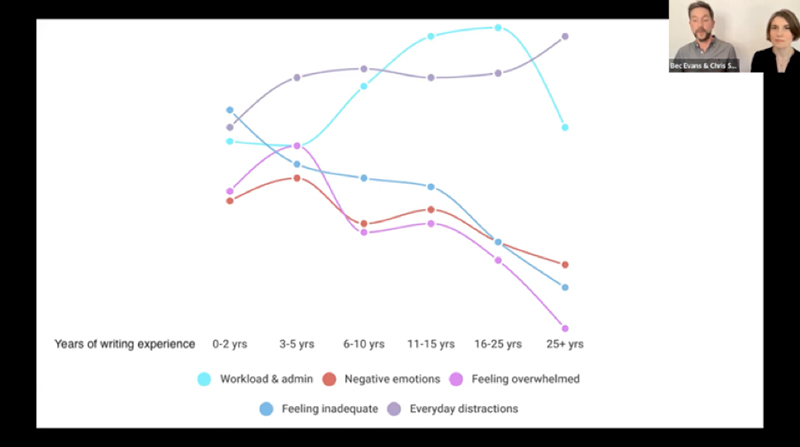
What gets in the way of writing is very personal – and so it’s important to take the time to understand what your barriers are – with the understanding that these will likely change over the course of a project or lifetime.
1. Time:
This is a challenge faced by many. Maybe you don’t have enough time – or for some, maybe too much.
Solutions:
- Binge writing: This has garnered a bad reputation in terms of productivity, but for some, a writing retreat or similar may prove effective.
- Daily: This is more of a traditional approach – a routine, perhaps the same time and place each day. It removes the need for willpower, with an acceptance that there will be a balance between good and bad days.
- Time Boxing: A scheduled approach – where you set aside 2 / 3 writing sessions a week, as you would do for an appointment or meeting.
- Spontaneous: This takes advantage of small moments in the day – less than 30 minutes: perhaps 10 minutes between meetings, on the train, or getting up 20 minutes early. This tends to work well for those with busy diaries!
Why not try tracking your writing time over the course of a week – see where you spend your time and look for those precious opportunities where you could write. Do you have too much time and find yourself procrastinating? Check to see if you are writing at the best time for you and consider trialling one of the above solutions.
2. Distractions:
This list could go on and on! Whether it be external distractions (email, phone, notifications, parental responsibilities), or internal (fears, doubts, questions over own ability) – we all have distraction barriers that get in the way of our writing.
Solution:
- Keep a distraction diary so you can understand (and be honest!) about what gets in the way – for you. From here you can start to build new habits and stop ones that are preventing you from moving forwards.
The brain craves clarity and rules; deciding on a solution and an action for when the distraction appears will give your brain the clarity that it needs!
3. How to start and keep going!
Two approaches were shared to help with this common question:
Solutions:
- Scale back: Don’t just focus on the end goal but seek to break it down in to manageable fragments – a scaffolding approach. Consider daily, weekly, or monthly writing sessions to help you meet the ultimate end goal: For instance, rather than thinking about the job of tackling 10,000 words, break it down in to manageable chunks of 250.
- Starter steps: Think of those small steps to help you meet your end goal – even down to opening your laptop! This comes down to building a habit and not being sucked into feeling scared or overwhelmed.

Final thoughts:
Developing positive associations with your writing is an important part of the process: Writing is cognitively demanding. You will often feel tired and sometimes negative about your work. As referenced above, it’s about building good habits and retraining the brain. If you focus on what’s gone well, you will be more likely to fondly remember writing and so will have positive associations when you return to it.
Be intentional! Notice what is working and what isn’t – discover how to find time, what gets in the way for you, and what is going to help you write. If you notice it, it will give you the power to change your behaviour.
And remember – what works for one person, will not necessarily work for another!
Extra resources that you may also find helpful:
